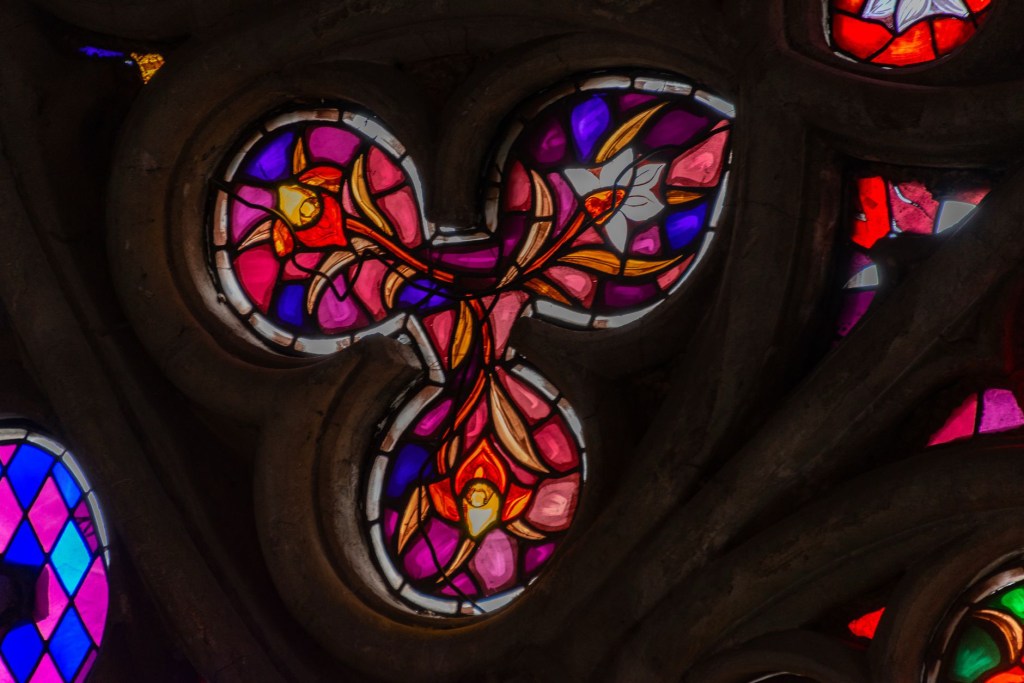
Great question! When God says “Let us make man in our image” (Genesis 1:26), it naturally raises the question: Who is “us”?
Here are the main explanations Christians have considered, with the clearest biblical support:
1. The Trinity View (Most Common Christian View)
Christians believe in one God in three Persons—Father, Son, and Holy Spirit. In Genesis 1:2, the Spirit of God is already present. John 1:1–3 says, “In the beginning was the Word… and the Word was God… Through him all things were made.” So when God says “Let us make man…” it reflects a conversation within the Trinity.
This is the strongest theological view supported by the New Testament.
2. The Heavenly Court View
Some say God could be speaking to His heavenly host—angels and spiritual beings who surround Him (see Job 38:7). But: humans were made in God’s image, not angels’. So this view doesn’t fully explain Genesis 1:26.
3. The “Royal We” or Majestic Plural
Like ancient kings, God may be using the plural of majesty—speaking of Himself in the plural to show greatness. This was common in royal language, especially later in history. However, there’s no clear evidence that early Hebrew used this literary device, so it may be unlikely here.
4. Clue Hidden in Plain Sight
Genesis 1:26 says “Let us…”, and then verse 27 switches to singular: “So God created man in his own image…” This shift from plural to singular hints at a complex unity in God—one being, more than one person.“Elohim” is a (plural noun) in Hebrew, used even when referring to the one true God.
God uses “us” in Genesis 1:26 likely because:
He is one God in three persons (Father, Son, and Holy Spirit). The Trinity was involved in creation. It reflects the richness and mystery of God’s nature—unity and diversity in perfect harmony.
“The LORD our God, the LORD is one” — Deuteronomy 6:4
Yet He reveals Himself in three persons, all fully God.
The Didache meaning “Teaching” is proof outside the Bible that contained instructions for early Christians. In Chapter 7 of the Didache, the text lays out this directive:
“Baptize in the name of the Father, and of the Son, and of the Holy Spirit, in living (running) water. But if you do not have living water, baptize in other water; and if you cannot do so in cold water, then in warm. But if you have neither, pour water three times on the head in the name of the Father and Son and Holy Spirit.”
This instruction not only highlights the importance of baptism in the early Christian community, but it also affirms the use of the Trinitarian formula—a clear alignment with what Jesus commanded in Matthew 28:19. The Didache reflects that early Christians took Christ’s words seriously.
One of the best is Warfield’s: “There is one only and true God, but in the unity of the Godhead there are three coeternal and coequal Persons, the same in substance but distinct in subsistence.”
Ryrie, Charles Caldwell. 1999. Basic Theology: A Popular Systematic Guide to Understanding Biblical Truth. Chicago, IL: Moody Press.

