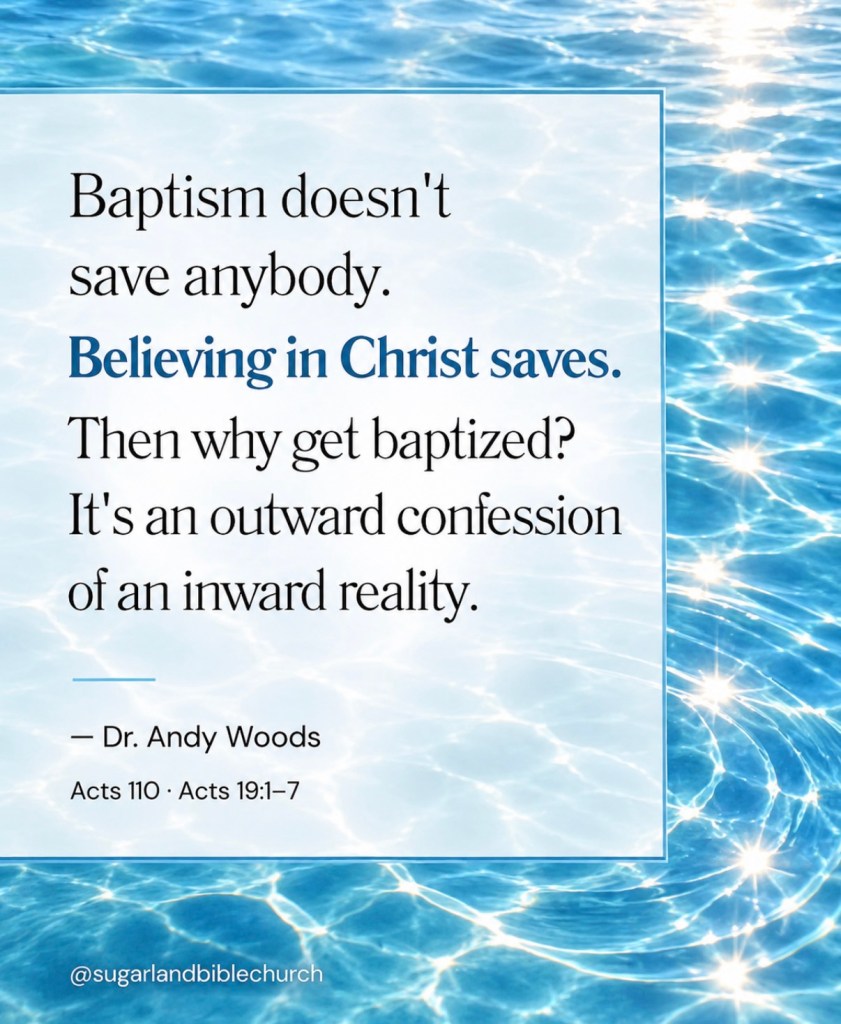
The Holy Spirit Before Water Baptism (Acts 10:44–48)
When Peter preached to Cornelius and his household, the Holy Spirit came upon those who heard and believed the message before they were baptized in water. Peter recognized that God had already given them the Holy Spirit, just as He had given the Spirit to the Jewish believers. Their baptism followed what God had already done in their lives. This demonstrates that receiving the Holy Spirit is not dependent upon first undergoing water baptism.
Paul’s Distinction Between Preaching and Baptizing (1 Corinthians 1:17)
Paul makes an important distinction when he says that Christ sent him to preach the gospel, not to baptize. His emphasis was on proclaiming Jesus Christ and His finished work. If the physical act of water baptism were the foundation or means of salvation, we would expect Paul to place that act at the center of his gospel commission. Instead, he directs attention to the preaching of Christ and the power of the gospel.
Understanding What Baptism Actually Saves (1 Peter 3:21)
Peter explains that baptism is not about physically washing dirt from the body. Its significance is found in the believer’s relationship with God through the resurrection of Jesus Christ. The water itself does not cleanse the conscience or remove the guilt of sin. Our confidence rests in Christ, who died and rose again. Baptism points us toward that greater spiritual reality.
Baptism Identifies Us With Christ’s Death and Resurrection (Romans 6:3–4)
Paul explains that being baptized into Christ identifies us with His death, burial, and resurrection. We are to understand that our old life has been crucified with Christ and that we are called to walk in the newness of life. Baptism illustrates this union with Christ and the transformation that comes through Him.
3 Do you not know that we who were baptized into Jesus Christ were baptized into His death? 4 Therefore we were buried with Him by baptism into death, that just as Christ was raised up from the dead by the glory of the Father, even so we also should walk in newness of life. (Romans 6:3–4, MEV)
The Conclusion
Water baptism is an important expression of obedience and identification with Jesus Christ. However, we must never confuse the outward act with the saving work of Christ Himself. The water does not replace the blood of Jesus, nor does a religious ceremony become the source of our salvation. Our forgiveness, righteousness, and new life are found in Jesus Christ. We are saved by God’s grace through faith, and our obedience flows from what He has already accomplished for us.